
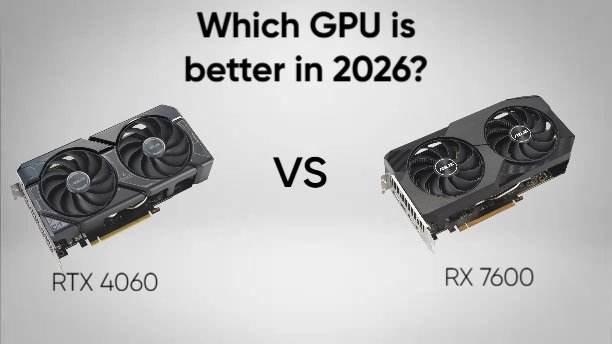
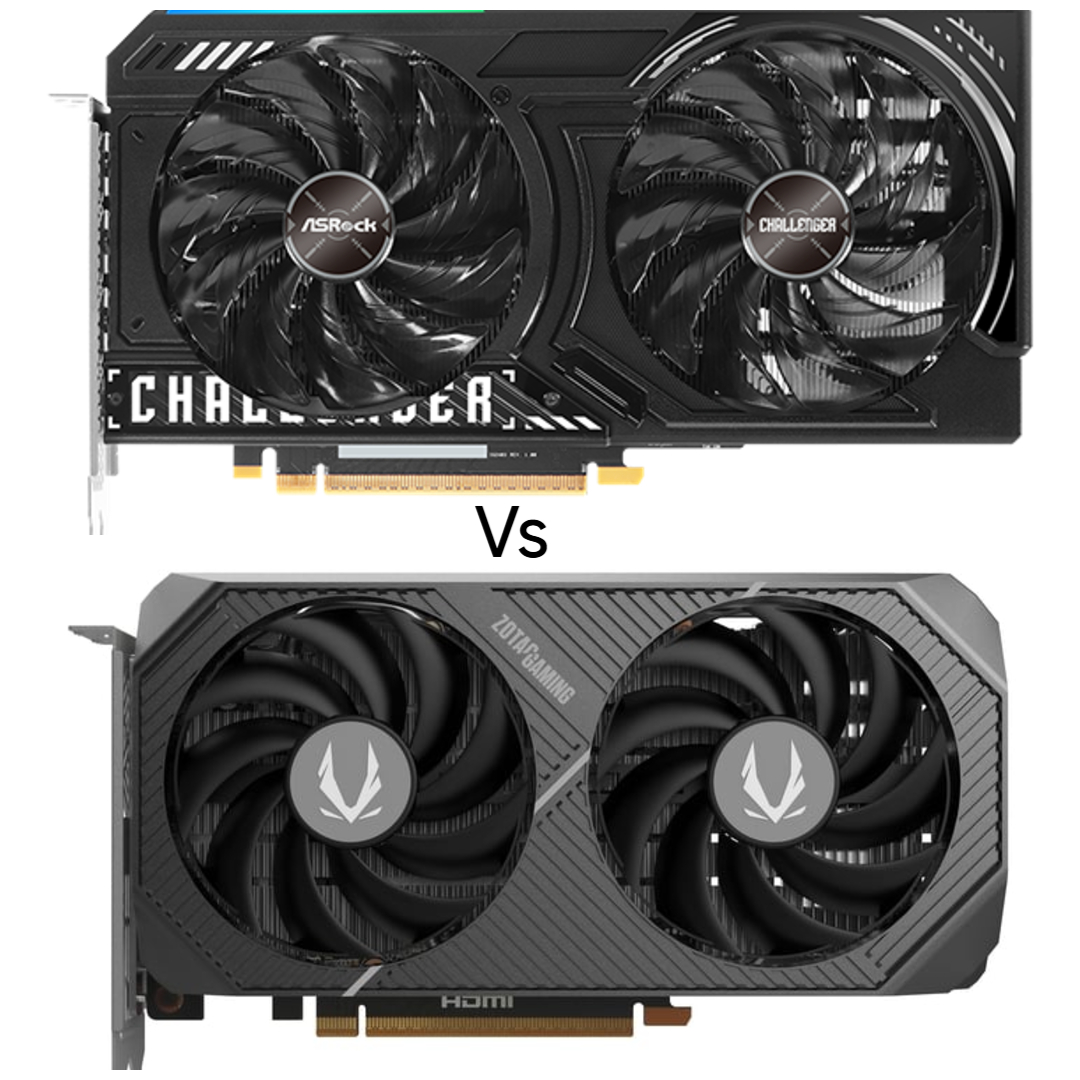
Can’t decide between the RTX 4060 and RX 7600? See which GPU wins in 1080p, 1440p, ray tracing, efficiency, and overall value before you buy
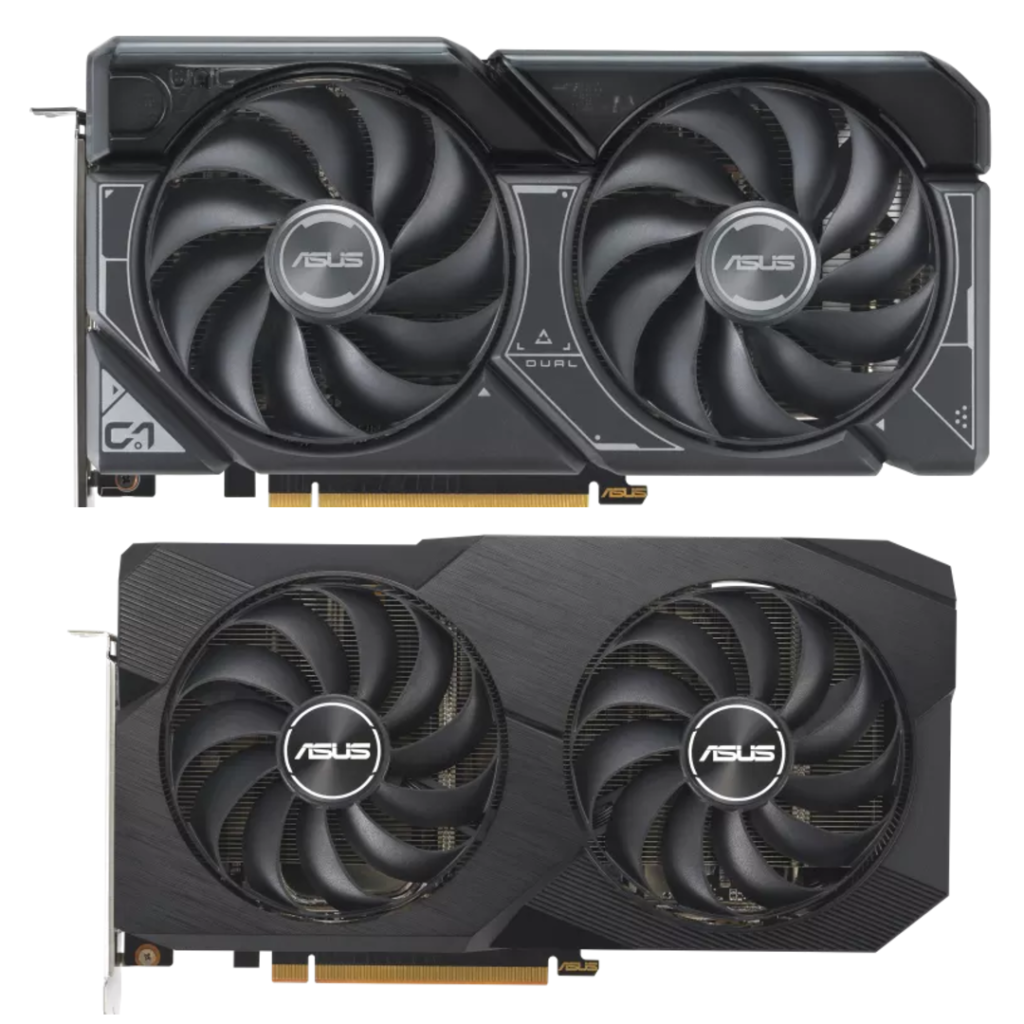
Quick Verdict: The RTX 4060 is the better overall GPU, thanks to stronger ray tracing, DLSS 3, better power efficiency, and a more complete feature set. The RX 7600 is still worth considering if it’s available at a noticeably lower price.
Check RTX 4060 current price on Amazon
Check RX 7600 current price on Amazon
Keep reading as we compare gaming performance, features, pricing, and overall value to help you decide which card is right for you.
RTX 5060 vs RTX 4060 Specifications
| Specification | RTX 4060 | RX 7600 |
|---|---|---|
| Architecture | Ada Lovelace | RDNA 3 |
| CUDA Cores / Stream Processors | 3,072 CUDA Cores | 2,048 Stream Processors |
| Ray Tracing Hardware | 3rd Gen RT Cores | 32 Ray Accelerators |
| AI Hardware | 4th Gen Tensor Cores | AI Accelerators |
| Base Clock | 1.83 GHz | 1.72 GHz |
| Boost Clock | 2.46 GHz | Up to 2.66 GHz |
| VRAM | 8GB GDDR6 | 8GB GDDR6 |
| Memory Bus | 128-bit | 128-bit |
| Memory Speed | 17 Gbps | 18 Gbps |
| Memory Bandwidth | 272 GB/s | 288 GB/s |
| Cache | 24MB L2 Cache | 32MB Infinity Cache |
| PCIe Interface | PCIe 4.0 x8 | PCIe 4.0 x8 |
| Power Consumption (TBP/TGP) | 115W | 165W |
| Recommended PSU | 550W | 550W |
| Upscaling | DLSS 3 + Frame Generation | FSR 3 + AFMF |
| AV1 Encoding | Yes | Yes |
| Launch MSRP | $299 | $269 |
| Launch Date | June 2023 | May 2023 |
If you were shopping based on specifications alone, choosing between the RTX 4060 and RX 7600 wouldn’t be easy. They both come with 8GB of GDDR6 memory, use a 128-bit memory bus, and are built with the same audience in mind: gamers who want solid 1080p performance without spending a fortune. Looking at the spec sheet, you’d be forgiven for thinking they’ll deliver almost the same experience.
But specs are only half the story.
NVIDIA went all-in on features with the RTX 4060. Better ray tracing, DLSS 3 Frame Generation, and excellent power efficiency give it strengths that don’t show up in a comparison table. The RX 7600 takes a different route. It leans more on traditional rasterized performance, offers slightly higher memory bandwidth, and is often the cheaper option, making it an appealing choice if your focus is getting the most FPS for the money.
The problem is that a specification sheet can’t tell you how a graphics card actually feels to own. It won’t show you which card handles demanding ray-traced games better, which one runs cooler and quieter, or how much of a difference technologies like DLSS can make a year or two from now. Those are the details that separate two GPUs which, on paper, look remarkably close.
That’s why this comparison goes beyond clocks, bandwidth, and core counts. The real question isn’t which card has the better specifications—it’s which one is the better buy.
Pricing
The RTX 4060 currently sells for around $300–$350, while the RX 7600 is usually available for $280–$300. Although the price difference isn’t huge, AMD’s card is generally the more affordable option.
If you’re shopping on a strict budget, the RX 7600 offers better upfront value. However, if the RTX 4060 is only around $20–$30 more expensive, it’s worth considering the extra investment. At that point, the price gap is small enough that overall performance and features become the deciding factors rather than cost alone.
Check RTX 4060 current price on Amazon
Check RX 7600 current price on Amazon
1080p Gaming
| Game (1080p Ultra) | RTX 4060 | RX 7600 |
|---|---|---|
| Cyberpunk 2077 | 89 FPS | 84 FPS |
| Black Myth: Wukong | 52 FPS | 48 FPS |
| Hogwarts Legacy | 86 FPS | 90 FPS |
| Assassin’s Creed Shadows | 73 FPS | 76 FPS |
| Starfield | 71 FPS | 75 FPS |
| Red Dead Redemption 2 | 98 FPS | 101 FPS |
| Forza Horizon 5 | 138 FPS | 145 FPS |
| Horizon Forbidden West | 95 FPS | 98 FPS |
| Call of Duty: Black Ops 6 | 131 FPS | 137 FPS |
| Marvel’s Spider-Man Remastered | 117 FPS | 114 FPS |
These figures are compiled from public benchmark videos and reviews; they are not our in-house measurements, all results represent native 1080p Ultra performance with no upscaling or Frame Generation enabled.
The RTX 4060 and RX 7600 were both built with 1080p gaming in mind, and for the most part, they deliver exactly what you’d expect. Modern AAA titles are easily playable at high or ultra settings, while competitive games can push well beyond 144 FPS. If all you care about is traditional rasterized performance, the gap between the two is much smaller than many people expect.
Across a broad mix of games, the RX 7600 often trades blows with the RTX 4060. AMD’s card can edge ahead in titles that favor RDNA 3, while NVIDIA pulls in front in others thanks to game optimizations and driver support. In practice, the average difference is usually only a few frames per second, meaning you’re unlikely to notice it during normal gameplay unless you’re watching an FPS counter.
Where the RTX 4060 begins to separate itself is when you move beyond native rendering. Games that support DLSS 3 and Frame Generation can see a substantial boost in frame rates while maintaining impressive image quality, making demanding titles feel much smoother than the raw benchmark numbers suggest. The RX 7600 supports FSR and AMD Fluid Motion Frames, which have improved over time, but DLSS still produce more consistent image quality and has broader support across popular games.
Ray tracing tells a similar story. While neither card is designed to max out every ray-traced setting at 1080p, the RTX 4060 handles these workloads far more comfortably. Games like Cyberpunk 2077, Alan Wake 2, and Indiana Jones and the Great Circle remain much more playable with ray tracing enabled, especially when paired with DLSS. The RX 7600 can certainly run these games, but you’ll often need to lower ray tracing settings or rely more heavily on upscaling to achieve similar frame rates.
Power efficiency is another advantage that’s easy to overlook until you actually own the card. With a typical board power of just 115W, the RTX 4060 consumes considerably less power than the RX 7600’s 165W. That translates to less heat, quieter cooling, and lower electricity usage over time—benefits that won’t show up in an FPS chart but can make a noticeable difference in day-to-day use.
If your priority is squeezing out every last frame in rasterized games for the lowest possible price, the RX 7600 remains a solid option. But once you factor in ray tracing, DLSS, Frame Generation, and superior efficiency, the RTX 4060 offers the more complete 1080p gaming experience, even if the average native FPS numbers don’t always tell the whole story.
Also read: Best GPUs for 1080p gaming in 2026
1440p Gaming
While both the RTX 4060 and RX 7600 are marketed as 1080p graphics cards, they’re still capable of handling 1440p gaming in many titles. The catch is that you’ll need to be a bit more selective with your settings. Less demanding games and esports titles run comfortably, but newer AAA releases often require a mix of high and medium settings to maintain smooth frame rates.
In native rasterization, the story doesn’t change much from 1080p. The RX 7600 remains slightly ahead in some games, while the RTX 4060 closes the gap or pulls ahead in others. Overall, the difference is small enough that neither card has a clear advantage based on raw FPS alone.
The bigger challenge at 1440p is the 8GB of VRAM. As texture quality and resolution increase, some modern games can exceed that limit, leading to stuttering or inconsistent frame times if settings are pushed too high. This isn’t a problem unique to either GPU—both cards are affected because they share the same memory capacity.
Where the RTX 4060 starts to pull away is in demanding games that support DLSS. Using DLSS Quality can deliver a noticeable performance boost while preserving excellent image quality, making 1440p a much more enjoyable experience. The RX 7600 can rely on FSR to achieve similar gains, but DLSS generally provides cleaner image reconstruction and is supported in more games.
If your primary goal is 1440p gaming, neither of these cards is an ideal long-term choice, especially for the latest AAA titles at maximum settings. However, if you’re willing to lower a few graphics options or use upscaling, both remain perfectly capable. Between the two, the RTX 4060 offers the more consistent experience thanks to its stronger ray tracing performance, DLSS, and overall feature set.
Also read: Best GPUs for 1440p gaming
Ray Tracing Performance
Ray tracing is where the gap between these two cards becomes much more noticeable. While the RX 7600 can handle lighter ray-traced workloads, the RTX 4060 delivers a smoother and more consistent experience in games that make heavy use of the technology. Titles like Cyberpunk 2077, Alan Wake 2, Black Myth: Wukong, and Indiana Jones and the Great Circle are all considerably more demanding with ray tracing enabled, and this is where NVIDIA’s third-generation RT cores begin to show their advantage.
The RTX 4060 also benefits from DLSS 3, which does more than just increase frame rates. Using DLSS Quality mode often provides a significant performance boost while maintaining excellent image quality, allowing demanding games to remain playable without sacrificing too much visual fidelity. In supported titles, Frame Generation can push performance even further, making ray tracing a much more practical option than it would be at native resolution.
AMD’s RX 7600 supports FSR 3 and AMD Fluid Motion Frames, both of which have improved considerably since launch. FSR 3 can deliver meaningful performance gains and works across a wider range of hardware, but image quality still isn’t as consistent as DLSS in many games. Fine details, distant objects, and fast-moving scenes generally look cleaner with DLSS, especially at lower rendering resolutions.
That doesn’t mean the RX 7600 is a poor choice if you don’t care about ray tracing. In fact, if you spend most of your time playing competitive shooters or traditional rasterized games, you’ll rarely notice the difference. However, if you’re buying a GPU with the latest AAA releases in mind, the RTX 4060 offers a clear advantage. Better ray tracing performance, superior upscaling, and more mature Frame Generation make it the more capable card whenever advanced graphics features come into play.
Power Consumption & PSU requirement
One of the biggest differences in the RTX 4060 vs RX 7600 comparison isn’t reflected in FPS charts—it’s power efficiency. The RTX 4060 has a rated power draw of just 115W, while the RX 7600 comes in at 165W. Despite delivering similar gaming performance in many titles, NVIDIA’s card does so while consuming significantly less power.
That lower power draw translates to practical benefits. The RTX 4060 typically runs cooler, is often paired with quieter cooling solutions, and places less strain on your power supply. It’s also a better fit for small form factor builds where heat and airflow are more limited.
Both graphics cards have a recommended 550W power supply, so upgrading your PSU is unlikely to be necessary if you’re building a new mid-range gaming PC. However, the RTX 4060 leaves more headroom for the rest of your system thanks to its lower power consumption.
The RX 7600 isn’t an inefficient GPU, but AMD trades some efficiency for slightly stronger native rasterization performance. If low power consumption, lower temperatures, and quieter operation matter to you, the RTX 4060 is the clear winner in this category.
RTX 4060 vs RX 7600: Which Should You Buy?
If all you want is the highest native FPS for the least amount of money, the RX 7600 is still easy to recommend. It’s usually a little cheaper, keeps up with the RTX 4060 in most rasterized games, and in some titles even comes out slightly ahead. For a straightforward 1080p gaming PC, it’s hard to complain about what AMD offers.
The problem is that buying a graphics card isn’t just about today’s benchmarks. Games are leaning harder into ray tracing every year, DLSS support continues to grow, and features like Frame Generation are becoming increasingly common in new releases. That’s where the RTX 4060 starts earning its higher price. It won’t magically double your FPS in every game, but it gives you more ways to improve performance when newer titles become demanding.
Then there’s efficiency. The RTX 4060 draws just 115W, compared to 165W for the RX 7600. That means less heat, quieter coolers, and a little more breathing room inside your PC. It’s not the kind of feature you’ll notice on day one, but it’s one of those things you end up appreciating after months of use.
When the difference is closer to $20–$30, the answer is much easier. Better ray tracing, DLSS 3, superior NVENC encoding, and lower power consumption make it feel like money well spent.
The RX 7600 is a good graphics card. The RTX 4060 is simply the one I’d rather own.
Read our standalone RX 7600 review
Read our standalone RTX 4060 review
Frequently Asked Questions (FAQs)
Is the RTX 4060 better than the RX 7600?
For most gamers, yes. While the RX 7600 can match or slightly outperform the RTX 4060 in some native rasterized games, the RTX 4060 offers better ray tracing performance, DLSS 3 with Frame Generation, lower power consumption, and stronger creator features, making it the better all-around graphics card.
Which GPU is better for 1080p gaming?
Both cards are excellent for 1080p gaming, but they excel in different areas. The RX 7600 offers outstanding value and competitive native performance, while the RTX 4060 provides a smoother experience in ray-traced games and those that support DLSS.
Is the RTX 4060 worth the extra money?
If the price difference is only around $20–$30, yes. The extra cost gets you better ray tracing, DLSS 3, Frame Generation, lower power consumption, and a more mature software ecosystem. If the RX 7600 is heavily discounted, however, it becomes a much more compelling value.
Is 8GB of VRAM enough in 2026?
For 1080p gaming, 8GB is still enough in most games, although some newer AAA titles may require lowering texture settings. At 1440p, both the RTX 4060 and RX 7600 start to show the limitations of their 8GB memory buffer in more demanding releases.
Which card is better for ray tracing?
The RTX 4060 is the clear winner. NVIDIA’s third-generation RT cores, combined with DLSS 3, allow it to handle ray-traced games much more comfortably than the RX 7600.
Which GPU is better for streaming and content creation?
The RTX 4060 is generally the better choice thanks to NVIDIA’s NVENC encoder, CUDA support, and broader optimization in creative applications such as Adobe Premiere Pro, DaVinci Resolve, Blender, and OBS Studio.
Should I buy the RTX 4060 or wait for a newer GPU?
If you’re building or upgrading a gaming PC today, there’s little reason to delay unless you know a new graphics card launch is imminent. The RTX 4060 remains a capable choice for 1080p gaming and offers a well-rounded feature set that should age better than the RX 7600.
is this faq good enough
Also read
RX 9070 XT Review: Is it really future proof?
RTX 4070 Ti SUPER vs RTX 5070: Which offers better value?
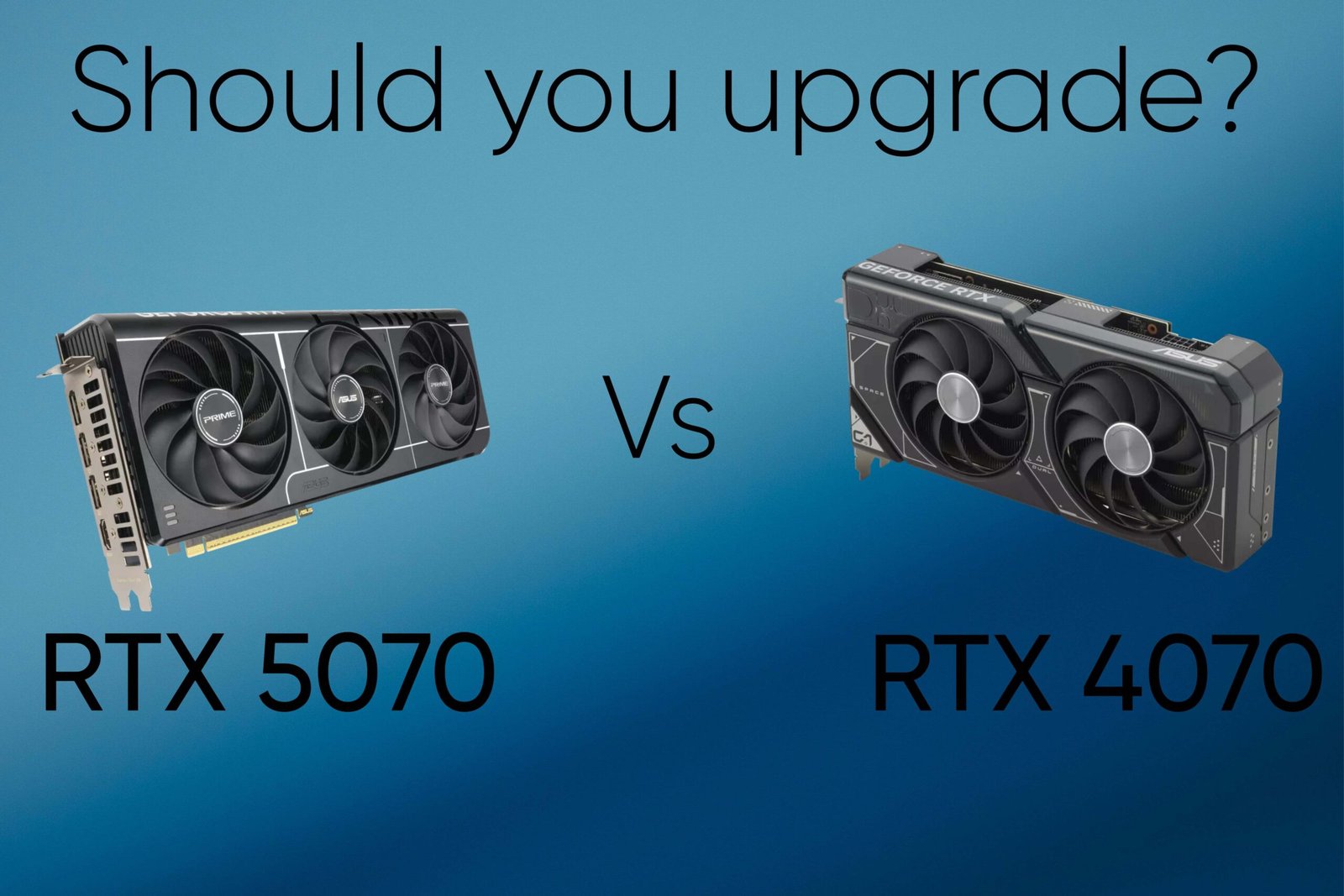
RTX 5070 vs RTX 4070: Should you upgrade?
RTX 5070 ti vs RTX 5070: Worth the Extra Money?
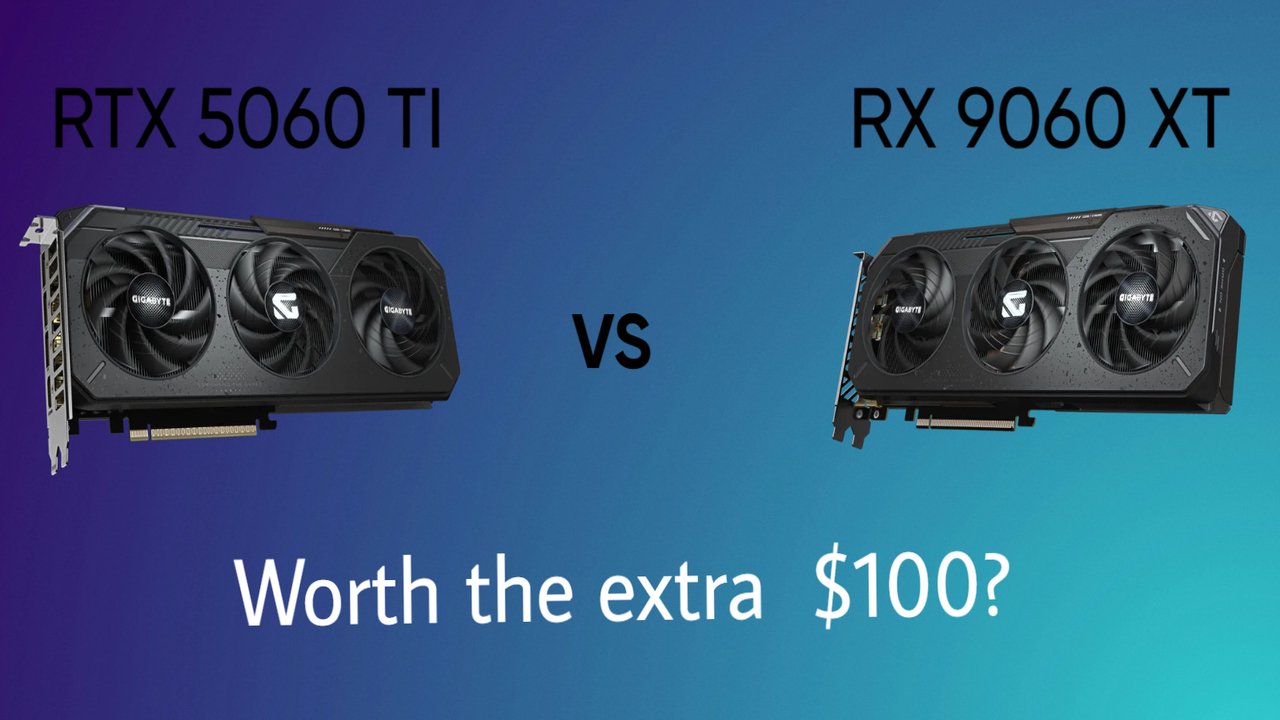
RTX 5060 ti vs RX 9060 XT: Is NVIDIA worth paying $100 more?
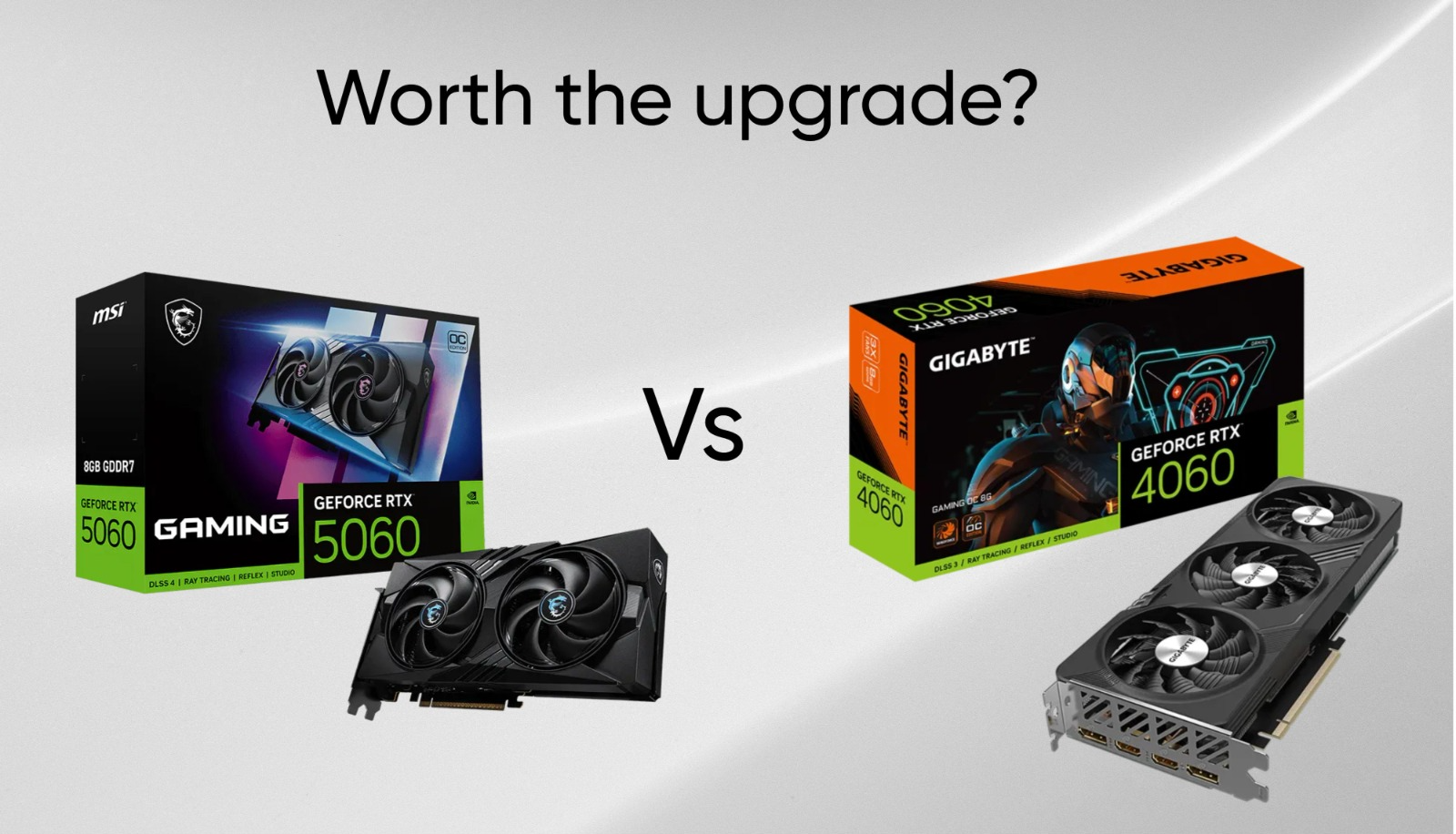
RTX 5060 vs RTX 4060: Is it worth the upgrade?
Best 1440p GPUs for Gaming in 2026
RTX 5060 Review: Is 8gb VRAM enough in 2026
Best GPUs for 1080p gaming in 2026
RTX 5060 vs RX 9060 XT: Which is the best 1080p GPU
RTX 4070 review: Is it worth buying in 2026?
Samsung 990 Pro SSD review 2026
Logitech Superlight G Pro X Review
As an Amazon Associate I earn from qualifying purchases

Leave a Reply