
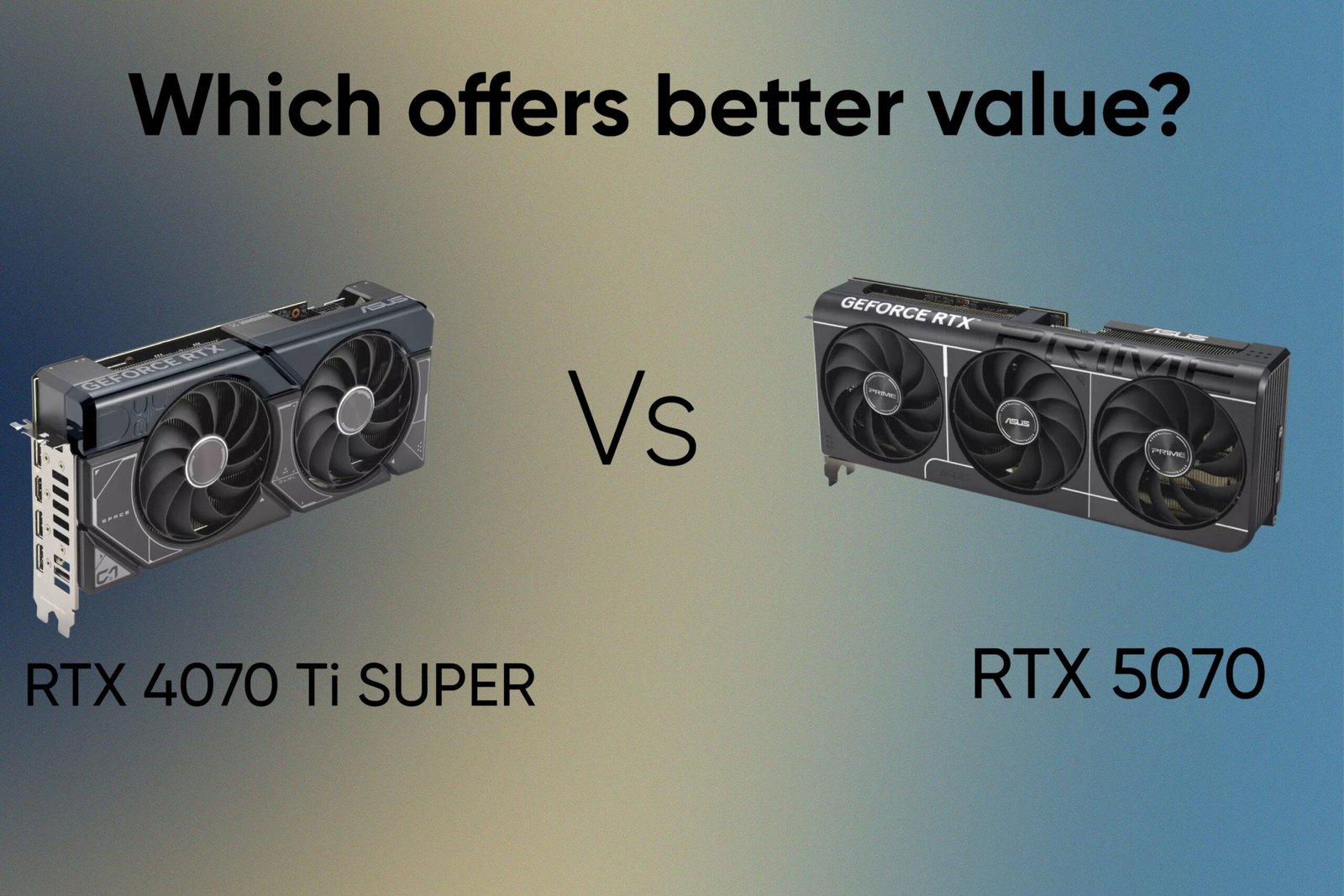
At first glance, the RTX 4070 Ti Super looks like the obvious winner. It packs 16GB of VRAM and generally delivers slightly better raw gaming performance, making it especially appealing for 4K gaming and demanding AAA titles. But the RTX 5070 isn’t just a refresh—it brings NVIDIA’s newer Blackwell architecture, DLSS 4, Multi Frame Generation, and noticeably better power efficiency.
While the RTX 4070 Ti Super sits in a higher price tier, it’s still a realistic alternative for anyone considering the RTX 5070. Spending more gets you 16GB of VRAM and stronger overall gaming performance, whereas the RTX 5070 offers a newer architecture, DLSS 4, and significantly better value. The real question is whether those extras are worth paying for.
RTX 4070 Ti SUPER vs RTX 5070
| Specification | RTX 4070 Ti Super | RTX 5070 |
|---|---|---|
| Architecture | Ada Lovelace | Blackwell |
| GPU | AD103 | GB205 |
| CUDA Cores | 8,448 | 6,144 |
| Tensor Cores | 264 (4th Gen) | 192 (5th Gen) |
| RT Cores | 66 (3rd Gen) | 48 (4th Gen) |
| Base Clock | 2,340 MHz | 2,325 MHz |
| Boost Clock | 2,610 MHz | 2,512 MHz |
| VRAM | 16GB GDDR6X | 12GB GDDR7 |
| Memory Bus | 256-bit | 192-bit |
| Memory Speed | 21 Gbps | 28 Gbps |
| Memory Bandwidth | 672 GB/s | 672 GB/s |
| L2 Cache | 48 MB | 48 MB |
| PCIe Interface | PCIe 4.0 x16 | PCIe 5.0 x16 |
| TGP / TBP | 285W | 250W |
| Recommended PSU | 700W | 650W |
| Display Outputs | 3× DisplayPort 1.4a, 1× HDMI 2.1a | 3× DisplayPort 2.1b, 1× HDMI 2.1b |
| Launch MSRP | $799 | $549 |
On paper, the RTX 4070 Ti Super is the more powerful graphics card. It has significantly more CUDA cores, 16GB of VRAM, and a wider 256-bit memory bus, giving it a clear advantage in raw compute performance and memory-heavy workloads.
The RTX 5070 takes a different approach. Instead of relying on bigger hardware, it benefits from NVIDIA’s Blackwell architecture, faster GDDR7 memory, and newer technologies like DLSS 4 and Multi Frame Generation. It’s designed to get more out of less, rather than simply throwing more hardware at the problem.
Raw Speed & Memory
With 8,448 CUDA cores compared to the RTX 5070’s 6,144, the RTX 4070 Ti Super holds roughly a 5–10% lead in traditional rasterized games. It’s simply the more powerful GPU when you’re looking at raw shader performance alone.
The memory setup is surprisingly close. Both cards deliver 672 GB/s of bandwidth, but the hardware behind that number is very different. The RTX 4070 Ti Super pairs a 256-bit memory bus with 21 Gbps GDDR6X memory, while the RTX 5070 relies on a narrower 192-bit bus backed by faster 28 Gbps GDDR7 memory. NVIDIA essentially traded bus width for faster memory without giving up bandwidth.
The extra 4GB of VRAM is what separates these cards the most. The RTX 4070 Ti Super’s 16GB buffer gives it more breathing room for 4K gaming, ultra-resolution texture packs, heavily modded games, and professional workloads. The RTX 5070’s 12GB is still enough for the vast majority of 1440p games today, but it’s also the specification most likely to become a limitation as future AAA titles continue pushing VRAM requirements.
Ray Tracing Performance
The RTX 5070 is the stronger ray tracing GPU overall. Thanks to NVIDIA’s Blackwell architecture, 4th-generation RT Cores, and 5th-generation Tensor Cores, it handles ray-traced workloads more efficiently than the RTX 4070 Ti Super. In demanding titles like Cyberpunk 2077 with Path Tracing or Alan Wake 2, the RTX 5070 is typically 15–25% faster at 1440p, especially when DLSS 4 and Multi Frame Generation are available.
That advantage doesn’t suddenly disappear at 4K because the RTX 4070 Ti Super has better ray tracing hardware—it doesn’t. The challenge is memory. Heavy ray tracing combined with 4K textures can push VRAM usage beyond 12GB, and once that happens, the RTX 5070 starts to lose performance. The RTX 4070 Ti Super’s 16GB of VRAM gives it more headroom, helping it maintain smoother frame times and, in some games, slightly higher native frame rates.
If you’re gaming at 1440p, the RTX 5070 is the better ray tracing card. At 4K, the RTX 4070 Ti Super becomes more competitive, not because its RT cores are faster, but because its larger VRAM buffer is less likely to become a bottleneck.
Content Creation & Streaming
The RTX 4070 Ti Super has a clear advantage for content creation. Its 16GB of VRAM provides more headroom for complex Blender scenes, high-resolution video editing in DaVinci Resolve or Adobe Premiere Pro, and AI workloads that can quickly exceed a 12GB memory buffer. The additional CUDA cores also help reduce render times in GPU-accelerated applications.
Blackwell does bring improvements outside of raw rendering performance. The RTX 5070 introduces NVIDIA’s 9th-generation NVENC encoder, offering improved AV1 and H.265 encoding along with support for professional features like 4:2:2 video encoding. Its newer Tensor Cores also accelerate AI-powered tools such as NVIDIA Broadcast more efficiently than the previous generation.
For creators whose workloads regularly push VRAM limits, the RTX 4070 Ti Super is the better card. The RTX 5070’s media engine is newer, but its 12GB frame buffer is the first specification likely to become a constraint in demanding production workloads.
Power Efficiency & PSU Requirements
The RTX 5070 is the more power-efficient graphics card. With a 250W TGP compared to the RTX 4070 Ti Super’s 285W, it draws around 35 watts less power under load while delivering broadly similar raster performance and stronger ray tracing performance. That translates to less heat inside the case, quieter cooling, and better overall performance
The lower power draw also makes the RTX 5070 easier to pair with existing systems. NVIDIA recommends a 650W power supply for the RTX 5070, while the RTX 4070 Ti Super typically calls for a 700W unit. Both GPUs use the 12V-2×6 power connector and are fully compatible with modern ATX 3.0 and ATX 3.1 power supplies.
For most desktop builds, the difference isn’t dramatic, but it can matter in smaller cases where cooling and airflow are more limited. If you’re upgrading an older PC with a quality 650W power supply, the RTX 5070 is also less likely to require a PSU replacement.
Price
The RTX 5070 is generally available in the $700–$800 range, making it the more affordable option for most buyers. The RTX 4070 Ti SUPER, on the other hand, is harder to find new since it has largely been replaced by newer-generation cards. Brand-new models often sell for over $1,000, with many premium variants falling between $1,000 and $1,200.
That said, the used and open-box market tells a different story. If you’re patient, it’s possible to find an RTX 4070 Ti SUPER for around $700–$800, putting it much closer to the RTX 5070’s price. Used cards can sometimes drop even lower, with good-condition models occasionally selling in the $650 range.
Check current RTX 5070 prices on Amazon
Check current RTX 4070 Super Ti on Amazon
1440p Gaming Performance
In traditional rasterized games, the RTX 4070 Ti Super keeps a modest lead at 1440p, typically averaging 5–10% higher frame rates than the RTX 5070. It’s a consistent advantage, but not a large one, and both cards are capable of pushing well over 100 FPS in most modern AAA titles.
Ray tracing paints a different picture. Blackwell’s 4th-generation RT Cores, 5th-generation Tensor Cores, and support for DLSS 4 Multi Frame Generation allow the RTX 5070 to outperform the RTX 4070 Ti Super by roughly 10–20% in demanding games such as Cyberpunk 2077 and Alan Wake 2. The lead becomes even more noticeable when path tracing is enabled.
The VRAM difference has surprisingly little impact at 1440p. Most current games stay comfortably within the RTX 5070’s 12GB frame buffer, even with high texture settings and ray tracing enabled. As a result, the RTX 4070 Ti Super’s 16GB of VRAM rarely translates into higher frame rates at this resolution, with its extra memory serving more as additional headroom than a tangible performance advantage.
| Game | RTX 4070 Ti Super | RTX 5070 |
|---|---|---|
| Cyberpunk 2077 | 112 FPS | 105 FPS |
| Black Myth: Wukong | 84 FPS | 78 FPS |
| Alan Wake 2* | 79 FPS | 73 FPS |
| Red Dead Redemption 2 | 158 FPS | 149 FPS |
| Hogwarts Legacy | 128 FPS | 120 FPS |
| Starfield | 106 FPS | 99 FPS |
| Assassin’s Creed Shadows | 97 FPS | 91 FPS |
| S.T.A.L.K.E.R. 2 | 91 FPS | 85 FPS |
Estimated average FPS at native 1440p using the highest in-game graphics settings with DLSS, ray tracing, and Frame Generation disabled. Actual performance may vary depending on your system configuration, drivers, and game version.
Also read : Best 1440p GPUs for gaming in 2026
| Game | RTX 4070 Ti Super(DLSS 3 Frame Generation) | RTX 5070(DLSS 4 Multi Frame Generation) |
|---|---|---|
| Cyberpunk 2077 (Path Tracing) | 128 FPS | 155 FPS |
| Alan Wake 2 | 116 FPS | 140 FPS |
| Black Myth: Wukong | 102 FPS | 123 FPS |
| Hogwarts Legacy | 145 FPS | 172 FPS |
| Star Wars Outlaws | 118 FPS | 141 FPS |
| Indiana Jones and the Great Circle | 126 FPS | 151 FPS |
Estimated performance using Ultra ray tracing settings with DLSS Quality enabled. Actual frame rates will vary depending on the game, GPU model, driver version, and system configuration.
4K Gaming Performance
The RTX 4070 Ti Super extends its lead at 4K, typically delivering 10–15% higher frame rates than the RTX 5070 in native rasterized games. Unlike 1440p, the extra 16GB of VRAM becomes a real advantage rather than just additional headroom. Modern AAA games with ultra textures can push beyond 12GB of VRAM, allowing the RTX 4070 Ti Super to maintain steadier frame rates and smoother frame pacing where the RTX 5070 begins approaching its memory limit.
Ray tracing follows a similar pattern. Blackwell’s newer RT hardware is more efficient, but that advantage becomes increasingly difficult to capitalize on once VRAM usage climbs. In games like Cyberpunk 2077 and Alan Wake 2 at native 4K with maximum ray tracing settings, the RTX 4070 Ti Super often delivers more consistent performance simply because it has more memory available for textures, geometry, and ray tracing data.
DLSS 4 Multi Frame Generation helps the RTX 5070 close much of the gap in supported titles, making high-refresh 4K gaming far more achievable than native rendering alone. Even so, the RTX 4070 Ti Super remains the more comfortable choice for native 4K gaming, particularly in newer releases that continue to increase VRAM usage.
RTX 4070 Ti SUPER vs RTX 5070: Which Should You Buy?
The RTX 4070 Ti SUPER and RTX 5070 excel in different areas, making this a less straightforward comparison than it first appears. If your priority is native gaming performance, especially at 4K, the RTX 4070 Ti SUPER has the advantage. Its additional CUDA cores and 16GB of VRAM allow it to maintain higher frame rates in rasterized games while providing the memory headroom needed for demanding AAA titles, high-resolution texture packs, and professional workloads such as video editing, 3D rendering, and AI content creation.
The RTX 5070, meanwhile, delivers exceptional value for its price. At 1440p, its 12GB of VRAM is rarely a limitation, making it an excellent fit for modern 1440p gaming. It offers stronger ray tracing performance, support for DLSS 4 Multi Frame Generation, better power efficiency, and a much lower launch price, making it the more compelling option for the majority of gamers.
Neither card is objectively better in every scenario. The RTX 5070 is the stronger all-around choice for most people thanks to its modern feature set, ray tracing performance, and value. The RTX 4070 Ti SUPER is still worth considering if your focus is native 4K gaming, content creation, or workloads where the extra 4GB of VRAM provides a tangible advantage.
Check current RTX 5070 prices on Amazon
Check current RTX 4070 Super Ti on Amazon
Frequently Asked Questions
Is the RTX 4070 Ti SUPER faster than the RTX 5070?
Yes, the RTX 4070 Ti SUPER is generally around 5–10% faster in native rasterized gaming and extends that lead to roughly 10–15% at 4K. Its higher CUDA core count and 16GB of VRAM give it an advantage in demanding games and memory-intensive workloads.
Is the RTX 5070 better for ray tracing?
Yes. The RTX 5070 features NVIDIA’s newer Blackwell architecture with 4th-generation RT Cores, 5th-generation Tensor Cores, and support for DLSS 4 Multi Frame Generation. At 1440p, it typically outperforms the RTX 4070 Ti SUPER in ray-traced games, although the 4070 Ti SUPER can regain the lead at native 4K when the RTX 5070’s 12GB VRAM becomes a limitation.
Is 12GB of VRAM enough for gaming in 2026?
For 1440p gaming, 12GB is still enough for the vast majority of modern titles, even with high settings and ray tracing enabled. At 4K, however, some newer AAA games can exceed 12GB of VRAM, making 16GB the more comfortable option for maximum settings and long gaming sessions.
Which GPU is better for 4K gaming?
The RTX 4070 Ti SUPER is the better choice for native 4K gaming. Its 16GB of VRAM provides additional memory headroom, helping maintain smoother frame rates and better frame pacing in demanding titles with ultra textures and ray tracing enabled.
Which GPU offers better value?
The RTX 5070 offers better overall value. It delivers excellent 1440p gaming performance, stronger ray tracing, newer AI features, lower power consumption, and a significantly lower launch price than the RTX 4070 Ti SUPER.
Which GPU is better for content creation?
The RTX 4070 Ti SUPER is the stronger option for professional workloads such as Blender, DaVinci Resolve, Adobe Premiere Pro, and AI applications. Its 16GB of VRAM makes it better suited for complex projects that can exceed the RTX 5070’s 12GB memory capacity.
Should I upgrade from an RTX 4070 Ti SUPER to an RTX 5070?
In most cases, no. While the RTX 5070 introduces Blackwell features like DLSS 4 Multi Frame Generation and improved ray tracing performance, the overall rasterization gains are minimal, and the RTX 4070 Ti SUPER remains faster in many native gaming workloads. The upgrade only makes sense if you specifically want Blackwell’s latest AI features.
Should I buy a used RTX 4070 Ti SUPER or a new RTX 5070?
If you can find a used RTX 4070 Ti SUPER at a similar price to a new RTX 5070, it’s a compelling option for native 4K gaming and content creation thanks to its 16GB of VRAM. However, if the price gap is significant, the RTX 5070 is usually the better buy because of its newer architecture, stronger ray tracing performance, better efficiency, and full support for DLSS 4 Multi Frame Generation.
Also read
RTX 5060 Review: Is 8gb VRAM enough in 2026
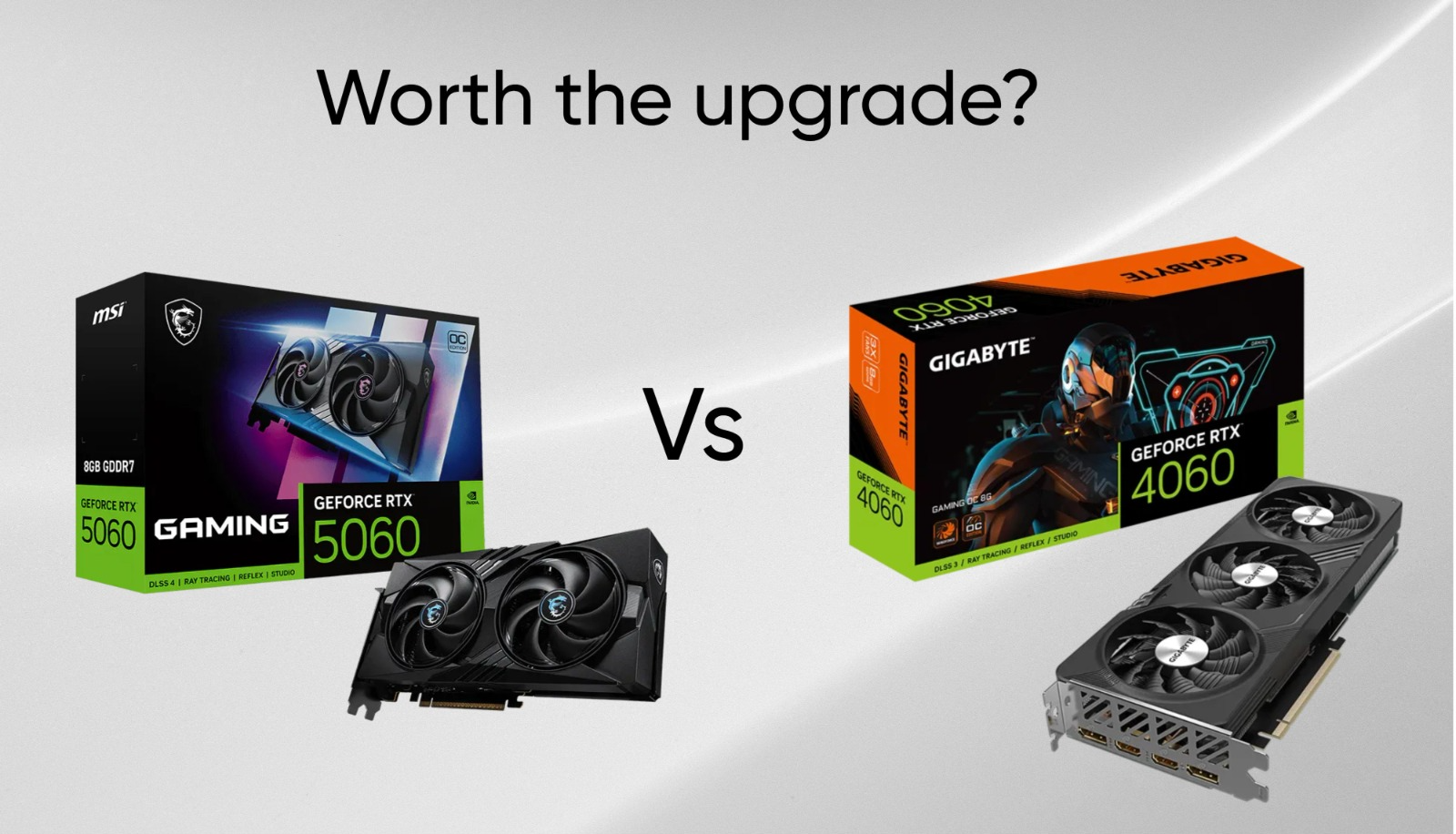
RTX 5060 vs RTX 4060: Is it worth the upgrade?
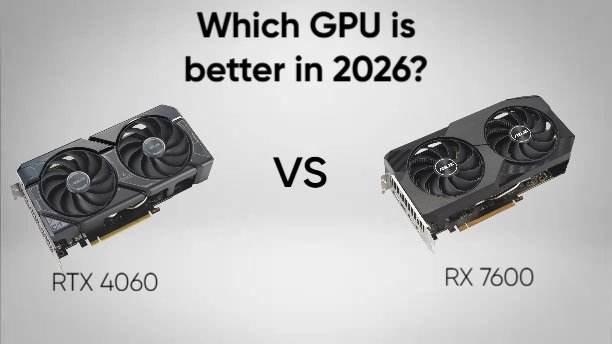
RTX 4060 vs RX 7600: Which is the better buy in 2026?
Intel Arc B580 vs RTX 5060: Don’t buy until you read this
Is the RTX 5060 Ti good for 1440p gaming
RX 9060 XT Review: The Best GPU for 1080p Gaming Right Now?
Best GPUs for 1080p gaming in 2026
RX 9070 XT Review: Is it really future proof?
Is RTX 4060 it still worth buying in 2026?
RX 9070 review: Is it REALLY worth your money?
Best 1440p GPUs for Gaming in 2026
RTX 5070 review: The best 1440p GPU in 2026?
RX 7600 Review: Is it still worth buying in 2026
RTX 5060 vs RX 9060 XT: Which is the best 1080p GPU
RTX 4070 review: Is it worth buying in 2026?
Samsung 990 Pro SSD review 2026
Logitech Superlight G Pro X Review
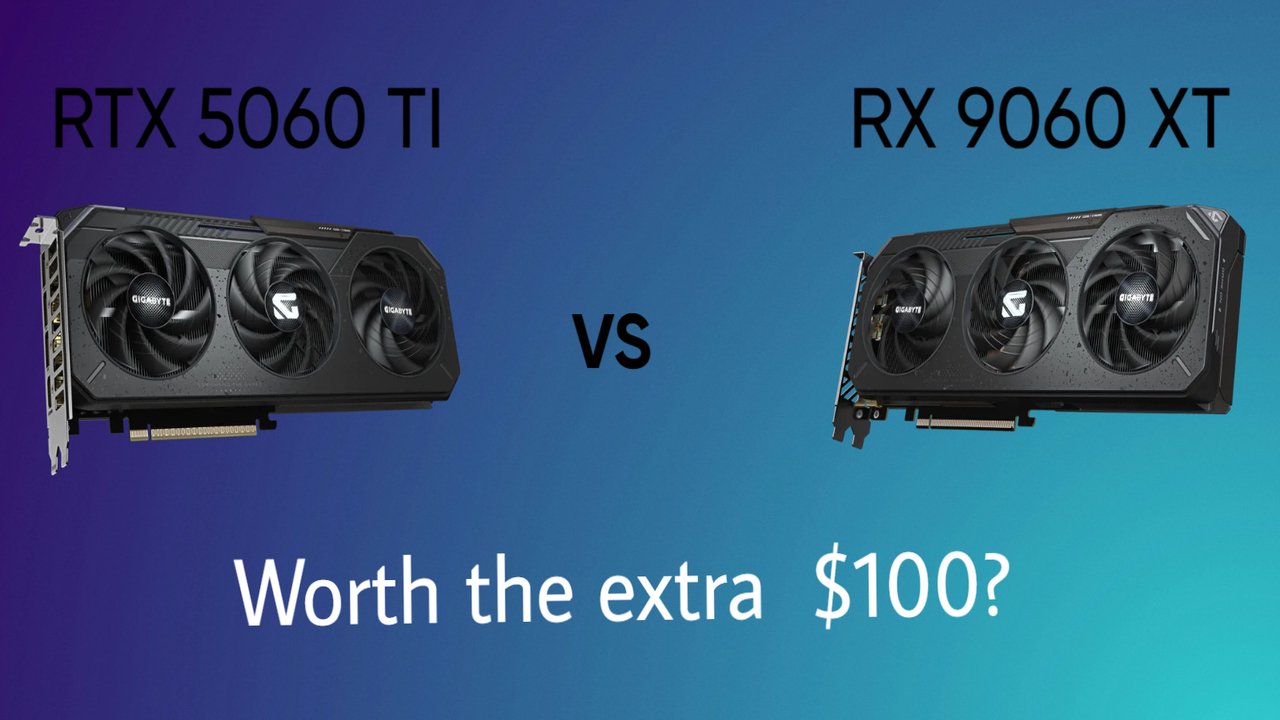
RTX 5060 ti vs RX 9060 XT: Is NVIDIA worth paying $100 more?
RTX 5070 vs RTX 4070: Should you upgrade?
RTX 5070 ti vs RTX 5070: Worth the Extra Money?
As an Amazon Associate I earn from qualifying purchases

Leave a Reply